Wholesome Badass

A Work in Progress — Healing from All the Things​

In Charge of Rejection

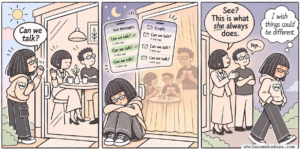
The love I knew was conditional, unpredictable, and readily withheld. I had no template for love that was safe, steady, and kind. I continued to reenact that relational trauma in nearly every relationship. While I am the common variable, so are my template for connection and the personality type it consistently draws me to. For much of my life, I engaged in relationships that diminished me. I tried, with limited understanding and skill, to redeem them. Which seemed impossible, particularly once I stopped agreeing to matter less. I’d try emphatically to understand what was happening between us so we could really connect, navigate our differences, and engage on mutual terms and in good faith. Instead, I was met with defensiveness, denial, and accusations of manufacturing chaos. Eventually, stonewalling. I was seeking connection with people whose behavior, I now see, as prioritizing deference. I didn’t recognize that we weren’t seeking the same thing, or that my attempts to communicate and establish mutuality might be received as defiance. Apparently, I was challenging the terms of a power dynamic I hadn’t even recognized. And when I finally stopped trying, that was unacceptable, too. With profound grief, I have had to acknowledge that the bond is too harmful to continue. The choice to stop chasing connection and approval has been ill-received. And cited only as further evidence of my troublesome, ungrateful, poor character and as the sole cause of our issues. “See? This is what you always do.” “Well, I guess that’s how much it meant to you.” “I thought you said you wanted to work things out.” “And you wonder why things are the way they are.” But isn’t it kind of like a doctor calling the time of death or delivering a diagnosis? The doctor doesn’t speak the death or disease into existence. He simply records it and moves forward accordingly. I’m not claiming to be a doctor. Obviously. I’m just saying, I’m finally able to trust my own experience and recognize the larger pattern without allowing someone else’s explanations, justifications, or occasional good moments to override it. And I can make my decisions based on that pattern rather than its exceptions.

Read More
Black-and-white illustration of a woman isolated behind a wall as family members reinforce the divide, symbolizing triangulation and parental alienation.

Your Enemy’s Enemy Is Your Friend

Being publicly told “you’re welcome to join” by people who openly disregard and disrespect me is hardly evidence of genuine inclusion. The invitation is presented as evidence of goodwill, while my condition of repair before returning is presented as proof that I’m choosing to separate myself from the family. No contact was a tragic last resort. There’s something particularly cruel about weaponizing my decision to protect myself from further harm. Years after a loveless, volatile marriage and unnecessarily contentious divorce, my estranged sister and ex-husband established an alliance of their own. I had married a man whose emotional patterns mirrored my sister’s, recreating the same relational dynamic. Given their shared, longstanding patterns of divisive behavior, their alliance was hardly surprising. They began gathering with my children while excluding me, despite my repeated requests that my sister stop. The resulting division extended beyond my relationships with either of them, affecting my children, our co-parenting relationship, and my already strained relationship with my mother. As my mother liked to say, “Your enemy’s enemy is your friend.” Whatever their intentions or explanations, their words and actions hurt our family. That harm was not mitigated by context or justification.

Read More