
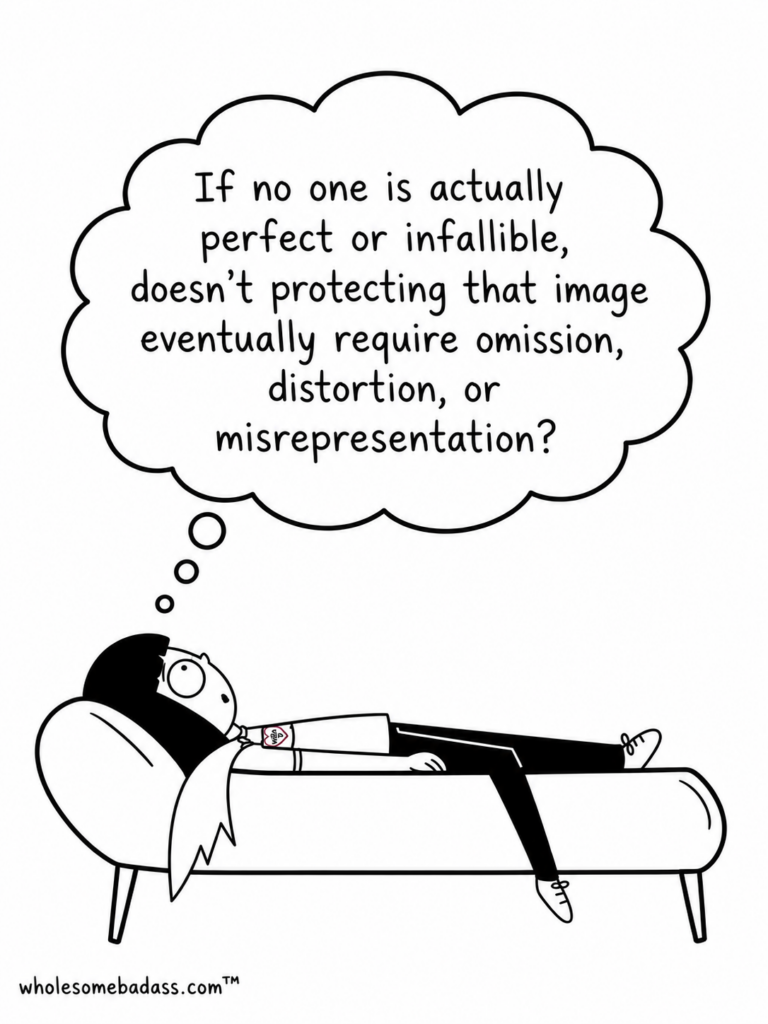
I have been giving thought to the archetypal persona—the kind of person for whom being or even appearing wrong, incorrect, uncertain, or imperfect seems almost impossible to fathom or tolerate, at least as I have experienced them.
Like what happens when being seen as good, right, or infallible is key to the archetypal identity? One who can readily accept and explore a mistake or misstep has less reason to distort the truth. If admitting fault threatens the whole structure, there is reason to alter, omit, or misrepresent whatever threatens it.
The story may need managing.
Incomplete truths may need to stand in for the whole truth.
Harm may need minimizing.
Someone else may need to be positioned as wrong.
At some point, the way we protect our image is also information about our character.
Maybe goodness is not the inability to be wrong.
Maybe it is the ability to remain honest when we are.
As I continue to seek a wholesome path through life—one rooted in spiritual grace—I am also finding out exactly how badassery shows up in my daily life as a byproduct.
I think the two may be inextricably linked.