Wholesome Badass

A Work in Progress — Healing from All the Things​

Thomas Merton quote about abundance and deprivation, reflecting themes of emotional neglect, trauma, and inherited power dynamics

My Trajectory- The Matthew Effect

The Path that Formed Me I didn’t “pick bad people.” I picked familiar nervous systems—people whose emotional vacancy felt like home, because that’s what I learned from the people I loved and needed most. I’m tracing a path laid out long before I understood it. Neurodivergent, highly sensing, physically and emotionally reactive to things others barely notice. My discomfort didn’t fit the acceptable range. It wasn’t seen as different, but as wrong. And the fear of consequences for that discomfort made every moment fretful. My mother couldn’t tolerate the burden of learning how to comfort, nurture, and shelter me. So I was cast as “too sensitive,” “dramatic,” “manipulative,” “too much,” and later, “crazy.” Once she offloaded the responsibility of soothing me by turning it into judgment—impossible, ungrateful—others eagerly joined in: her mother, her brother, then my sister. Any sign of pain, need, or boundary was met with distance, disgust, silence, shunning. Instead of bridging me to support, she ostracized me—building a wall around me. I see now the water I was swimming in. And my boys were bathed in it too. “For unto every one that hath shall be given, and he shall have abundance: but from him that hath not shall be taken away even that which he hath.”—Thomas Merton

Read More
Woman with half her face visibly distressed and tearful, the other half covered by a composed mask of her own face, symbolizing emotional masking and how composure is rewarded while distress is invalidated.

When “What Are You So Angry/Upset About?” Isn’t Actually Concern

I’m finally recognizing how validity gets measured not necessarily by the truth of what’s said, but by the composure of the person saying it. My sister recognized this dynamic early on. As someone deeply sensitive and reactive, I was easy to push. She could use subtle, almost invisible cues—like dog whistles—to trigger me. When I reacted, my distress was visible. She soared, by contrast, appearing calm, composed. The comparison was stark: her unaffectedness made her look right, while my emotional presentation made me look wrong. If you’re overwhelmed, overstimulated, or visibly distressed, your words can be dismissed simply because the delivery isn’t “correct.” You’re invalidated—not for what you say, but for failing to mask emotion. Meanwhile, those who appear composed—whether less sensitive, more resilient, or simply checked out—are granted credibility. In conflict, content matters less than presentation. This dynamic is often weaponized. A question like, “What are you so angry about?” masquerades as concern but functions as control, subtly discrediting the other person. In closed systems—family, workplace, or community—the sensitive one easily becomes the scapegoat. Sensitivity is reframed as weakness, instability, or unreliability. Any emotional communication that challenges the status quo is disqualified before it’s even heard, dismissed not for its substance but for the unmasked feelings attached. Composure paraded as proof of virtue; sensitivity condemned as proof of sin.

Read More
Closed interior door with a narrow line of light beneath it, representing the experience of being shut out while continuing to endure, witness, and remain present.

Scapegoating and the Cost of Speaking Up

The Truth That Cannot Be Erased For over a decade, this space has been my witness. For a multitude of reasons, outside of what has been designated as my willfullness and lack of gratitude, I have never been a pleasing or “quiet” victim sufferer. By around age eleven, I understood that my highest goal in life was to become someone else—or to become more palatable while absorbing abuse. I failed equally at both. I sought and gave myself to many similarly toxic situationships, I suppose, in the name of practice and growth in the art of better abuse-getting. The Reality of the Scapegoat As a neurodivergent survivor of childhood trauma and sibling molestation, my so-called “hysteria” was the only language available to me in an environment that protected my abuser and pathologized my pain. My sister was endorsed as the golden child. I was left to navigate the wreckage of her actions alone. She was praised for not being like me and pitied for having to deal with my “drama.” The Refusal to Be Gaslit This blog documents my experience as the family scapegoat—the person who could not believe or pretend that the “flow” was good. I was encouraged to calm down, be positive, grateful, you know- JUST go with the flow, even when that flow was designed to drown me. A Legacy of Resistance My “tantrums” were protests. My “outbursts” were the sound of a person being erased in real time. I write about the dirty and unsurprising alliance between an abusive sister and a similarly narcissistic ex-husband for what it is: a coordinated effort which denied me peace and my children. The Record for My Sons I am not begging for a seat at a table where I am not respected. I keep this record so my children may one day understand that their mother was not “unhinged” simply as a defect. She was unsupported, overstimulated, and being crushed by a system she could not fathom. A Note on My Methods of Survival In earlier chapters, I used my sister’s full name and shared specific accounts of professional and personal abuse, including details she offered as warning shots about how she handles uncooperative others. I did this frantically, without a playbook on navigating coercive abuse or even any idea that coercive abuse was a thing. I did so without a support system. I am not proud of the desperation that shaped those posts. But I am not ashamed of how I reacted to being molested, scapegoated, and erased. I was a person without a net, doing the only that I could—telling my truth- raging against those who harmed and silenced and erased me. In the only space I can.

Read More
Quote image: “If you’re not at the table, you’re probably on the menu.” Exclusion, scapegoating, triangulation, and black-sheep labeling in family and social systems.

Dissent and Discipline: Understanding Family Dynamics

The Binary World I Grew Up In In my family, things weren’t simply liked or disliked—they were either the best or the worst. No middle ground, no “not for me.” If you didn’t love something, you had to hate it. Once something was labeled right or wrong, it became collective truth. Everyone had to agree—or at least pretend to. Questioning, hesitating, or feeling differently wasn’t just disagreement; it was dissent. And dissent made you the enemy. That breach wasn’t corrected, it was punished. Not to remove the threat, but to create a cautionary tale: this is what happens when you don’t fall in line. You lose protection. You’re cast out. Cooperation or neutrality didn’t exist—only winners and losers. And victory was best established by the outcast’s observable demise. Since exile wasn’t enough. You were destabilized—pressured, undermined, and then blamed for the very instability imposed on you. The campaign is subtle, managed through half-truths and character attacks disguised as concern. And here’s the part that hurts the most: I absorbed it. I carried those hateful beliefs and destructive behaviors into my own life. It’s true that hurt people hurt people. For decades, I caused pain equal to what I had lived—sometimes more. The first 35 years of my life were marked by destruction, fueled by the system I came from.

Read More
Text image reading: “Trauma Bonding can make you terrified of ‘losing’ your abuser. Just keep in mind that you’ll also be losing the gaslighting, the sleepless nights, the knots in your stomach while they were ignoring you, the feeling of being blamed, and the stress of holding onto something that always felt like it was slipping away."

Trauma Bond: Addiction to the Abuser 

Across my closest relationships—mother, sister, husband, children—harm was never something to repair. It wasn’t acknowledged as harm at all, but reframed as my perception, my fault, my failure. Peace was never on offer. If I stayed, there was no peace. If I left, I wasn’t allowed to go in peace either. Departure had to hurt—because how could being without them be permitted to feel better than being with them? Relief was available only through my disappearance or my transformation. A structural issue. This closed system demands erasure or alteration, never mutual change. My pain is not evidence of harm, only inconvenience. I continue to bind myself to systems in which harm is normalized, repair is forbidden, and my full presence threatens the equilibrium. Trauma bonding pulls me in. Scapegoating keeps me in place. I’m recognizing pattern familiarity, not personal defect. “In a narcissistic family system, the scapegoat is forced to carry collective shame, guilt, and dysfunction. The family denies reality, refuses outside help, and isolates the victim, perpetuating the cycle. The result is long-term harm: C-PTSD, anxiety, depression. Leaving feels terrifying, even though staying is destructive, because the bond convinces you that survival depends on the abuser. Under extreme pressure, the scapegoat may break—reactive anger that the family then weaponizes as proof of their narrative: See? They’re crazy.“

Read More
Quote about false narratives created by people who cause harm to avoid accountability for their actions.

The Quiet Logic of Exile

In connecting with other survivors of similar dynamics, I’m recognizing a pattern that seems less personal and more structural. In families and systems which rely on scapegoating, it’s apparently simpler to remove a wounded person than to acknowledge and repair what hurt them. Exile is the tidy solution. Repair would require humility, shared responsibility, and change. Removal does not. Visibility becomes an offense. Directness, sensitivity, and emotional earnestness aren’t acknowledged; instead, the person carrying them is quietly marked as the problem, serving well as a cautionary tale. What’s unsettling is how ordinary this can appear. The cruelty is subtle by design- expressed through concern, whispered warnings, and selective protection that isolates while claiming to care. No clear moment of rupture. Just a reorganization around comfort and protection of the system. Those still inside the system learn—often without being told: alignment is rewarded, and absence is easier to live with than complexity. In time, the person who stands alone, their alienation – is put forward as evidence of “how difficult/unwell they are”. The discomfort is neatly exported. The structure remains intact and protected fiercely by those it serves.

Read More
Text reads: “Be cautious of connections that feel like home if home wasn’t always a safe place for you.” A reflective image representing emotional awareness and healing from relational trauma.

When the Story Writes Itself

I can’t deny how “clean” and persuasive the narrative against me can look. That’s what happens when people of similar energetic makeup benefit from the same imbalance — the same rupture without repair. The story writes itself. I’m learning to recognize and name that attraction and familiarity. This isn’t self-exoneration. It’s pattern literacy. And it unsettles the most convenient explanation — that things are “difficult” only where I’m involved — when all other relationships remain intact through the shared commitment to avoidance of (conflict) resolution through silence, distance, and collective denial.

Read More
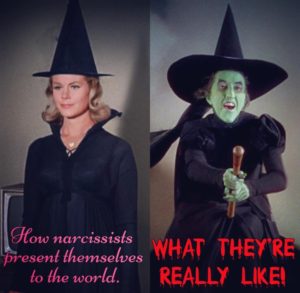
Split image showing a smiling “good witch” labeled as how narcissistic personalities present publicly, contrasted with an angry “wicked witch” labeled as how they behave privately in close relationships.

The Binary: Invisible or a Spectacle

Post-therapy processing. I keep noticing a painful pattern. When I speak directly—calmly, clearly, logically—it’s often received as aggression. Meanwhile, dishonesty softened with politeness, or harm delivered with a smile, is protected, even rewarded. In the past, I would escalate or collapse, distracting from the issue with my reaction. I don’t do that anymore, but the outcome is no better. My existence itself starts to feel like the problem. I’ve been labeled “demanding” or “confrontational” simply for asking direct questions or naming inconsistencies. Clarity seems threatening to those who rely on ambiguity. Without wiggle room, there’s no easy exit, so instead of engaging with the issue, the focus shifts to me for raising it. Clarity isn’t manipulation—it’s an attempt to understand what’s real. Passive aggression works differently. It dismisses boundaries, contradicts itself, or withdraws without owning the impact. If I react, my reaction becomes the headline. The harm vanishes, replaced by concern about my tone, my intensity, my feelings. That’s where the punishable feeling comes from—not because I’m wrong, but because I’m visible. This is especially common for people like me: highly sensitive, neurodivergent, earnest. In systems that prize politeness over honesty, directness breaks the spell. Accountability is reframed as hostility. Repair is avoided. The story becomes that the person naming the problem is the problem. My choices narrow: stay invisible, or be made into a spectacle. Neither feels safe or healthy. I’m not interested in winning arguments or proving anyone wrong. I want movement, repair, the question: what can we do to make this better? Yet again and again, I meet people who want only rightness—debates about tone, form, correctness—because once rightness is established, nothing more is required. I’m still healing from how often my nervous system has been punished for my inability to play along. I’m learning not to disappear or become a spectacle. I keep seeking a third way. I want to believe that in healthy systems, directness doesn’t equal war, disrespect, or danger. That standing without shame or silence isn’t audacious—or punishable.

Read More