Wholesome Badass

A Work in Progress — Healing from All the Things​

Lovestruck girl in March 2024 receiving a bottle labeled Love, Finally, contrasted with April 2025 holding the same bottle labeled Manufactured Closeness after love bombing and emotional withdrawal.

I Thought I Was the Lucky One: Love Bombing, Illusion, and the Spell I Mistook for Love

A year ago I ended a relationship that I had initially believed was the love of my life. I still kind of feel that way, even though being love bombed is technically not love. It is still my only experience of consistently feeling deeply known, completely seen, and ALSO safe and chosen. At long last, a glimpse of a life I wanted to live. I enjoyed more easy laughter, beautiful meals made FOR me — with full-on consideration for my likes and dislikes — more adventure and love and intimacy and actual joy in my year with that man than with anyone across all of my years. The Beginning of the Spell And this was a man I almost didn’t meet. We connected on a dating app and right out of the gate I told him I didn’t think we were a fit. Too short. An overall look I did not care for. Different politics. Born again Baptist preacher. Deeep South Georgia accent. No. No. No. He laughed a deep beautiful laugh at my very direct and repeated NO. Saying, what’s it going to hurt to just meet? If you don’t like me, no big deal. And he showed up in attire I didn’t love and a weird necklace and a gun in the back of his pants — and somehow I DID NOT CARE. Like fuck it. Be a short, necklace-wearing, gun-packing, Southern Baptist Trumper. Who even cares?! I feel like a million dollars in your presence. Free, beautiful, spoiled, protected, chosen. Because he spoke words and carried energy that dissolved me into something completely intoxicating. It was a spell. What It Felt Like to Be Chosen I remember telling him once, you are like a mega-dose of penicillin for me. Like some magical dose of medicine healing wounds that had been hurting for a lifetime. And he laughed and said, I don’t want to be penicillin. I want to be cocaine. Hysterical. Right? Wrong. Fully addicted to and reliant on him for THAT feeling that I literally could not imagine or want life without it. I see now — he wasn’t joking. To marvel was all I could do- at his gift for reading people. His natural attunement. Ease. Agility. Grace. With me, he tracked things no one had ever tracked. He noticed my sensitivities without me explaining them. He sheltered me from things that would overwhelm me or drain me, without needing credit or announcing it. He paid attention to my nervous system in a way nobody ever had. And since being sensitive and reactive is the thing I have paid most dearly for, to exist in a space where not only was that not the standard, I never worried about it. About being A Lot. And that felt like heaven. I never had to ask for consideration OR anything. I certainly did not have to ask twice. And it wasn’t just me. People lit up around him. Doors opened. Light followed him. But looking back now, it wasn’t light exactly. Maybe more like some kind of radioactive glow. Beautiful. Radiant. Compelling. Something people moved toward. Though leaving subtle but fatal erosion in its wake. The Pattern I Didn’t See Yet I knew of two other women who had been affected by his spell casting because he told me about them… in a very strategic way. Well selected clips of messages. Fragments. Probably how reality TV editing creates scenarios that never actually happened. He shared things in a way that made me feel fiercely protective. Assuming: They had mistaken his kindness for more and were problematic. Disruptive. He provided just enough incomplete truths and lack of context for me to draw the conclusion that the problem lay in that these women were deranged and unreasonable. Speaking unfavorably of anyone or anything is a thing he simply did not do. He appeared to be above that. Only an angel…… To say that I was moved by how he spoke of them with compassion while sharing things that made them seem terrifying, would be an understatement. Just enough for me to build “my own” conclusions. I remember thinking, what a good man. Steady. Calm. Curious. Benevolent beyond measure. Not of this world. Because the stretches of time we spent together, how present he was, I couldn’t have imagined he had time or energy to create so much trouble elsewhere. I couldn’t make the math work. One of the women had worked with him years before-whom he had removed. The other had received pastoral care for and support from him for addiction and related issues. There was enough context around them that if they ever spoke out against him(and that they did-relentlessly), he had pre-empted that with calculated actions which rendered them not credible, unreliable narrators, problematic. How he engaged difficult situations was breathtaking with so much ease and grace. No indication of feeling threatened or defensive. I experienced him as INcredible while recognizing them as clearly non-credible. From communication from them which he elected to share with me, I knew their full names and more. I was his lucky confidante. One day when he was behaving questionably on the heels of being taken to court, I optimized the power of Google, which with only a name and a city provided a cell phone number for the one, and boldly reached out. We spoke. The First Break in Reality I led with that I thought maybe we had similar wounds and experiences with (I provided only his initials). That we had each been made to doubt ourselves and our reality. She knew nothing of me while I had been strategically fed information about her unwellness, despair, addiction, suicide attempt, and repeated stints in treatment. Sensitive to her despair, I assured her she was younger and prettier than me, that I meant no harm, and that I would be stepping away for good. I genuinely believed I was being generous and helpful. Like, you are not alone. I’m not sure it had that effect. She shared texts and emails between them. And reported that the night before she had given him a large sum of money. Um ok. After hearing that, I didn’t tell him what I knew or pursue him for explanations. I didn’t allow for the opportunity for him to speak his beautifully crafted words. The End I Couldn’t Process Yet I blocked him and thought I might die from my utterly shattered heart…and withdrawal from the drug of my choice. HIM! Last night, restless and unable to sleep, I googled both women again. The first results were mugshots. And then one— the one I had engaged with—her obituary from December. Forty-five years old. Young children. Gone. And one of my first thoughts—unbelievably—was whether I had somehow contributed by reaching out to her. Typical: I am responsible for anything painful, difficult, or unfortunate. He probably hasn’t lost sleep over it. I would regularly say to him, shit, what if I am really no different from these women? I must in some way be similar. He assured me: You’re not like them. I pursued you. I never wanted this with them. They pursued me. The Meaning I’m Still Wrestling With I really did think I was the lucky one. And I suppose I was. Just not for the reasons I thought. Like I have not been dead or arrested. Yay me.

Read More
Text image reading: “Trauma Bonding can make you terrified of ‘losing’ your abuser. Just keep in mind that you’ll also be losing the gaslighting, the sleepless nights, the knots in your stomach while they were ignoring you, the feeling of being blamed, and the stress of holding onto something that always felt like it was slipping away."

Trauma Bond: Addiction to the Abuser 

Across my closest relationships—mother, sister, husband, children—harm was never something to repair. It wasn’t acknowledged as harm at all, but reframed as my perception, my fault, my failure. Peace was never on offer. If I stayed, there was no peace. If I left, I wasn’t allowed to go in peace either. Departure had to hurt—because how could being without them be permitted to feel better than being with them? Relief was available only through my disappearance or my transformation. A structural issue. This closed system demands erasure or alteration, never mutual change. My pain is not evidence of harm, only inconvenience. I continue to bind myself to systems in which harm is normalized, repair is forbidden, and my full presence threatens the equilibrium. Trauma bonding pulls me in. Scapegoating keeps me in place. I’m recognizing pattern familiarity, not personal defect. “In a narcissistic family system, the scapegoat is forced to carry collective shame, guilt, and dysfunction. The family denies reality, refuses outside help, and isolates the victim, perpetuating the cycle. The result is long-term harm: C-PTSD, anxiety, depression. Leaving feels terrifying, even though staying is destructive, because the bond convinces you that survival depends on the abuser. Under extreme pressure, the scapegoat may break—reactive anger that the family then weaponizes as proof of their narrative: See? They’re crazy.“

Read More
Quote about false narratives created by people who cause harm to avoid accountability for their actions.

The Quiet Logic of Exile

In connecting with other survivors of similar dynamics, I’m recognizing a pattern that seems less personal and more structural. In families and systems which rely on scapegoating, it’s apparently simpler to remove a wounded person than to acknowledge and repair what hurt them. Exile is the tidy solution. Repair would require humility, shared responsibility, and change. Removal does not. Visibility becomes an offense. Directness, sensitivity, and emotional earnestness aren’t acknowledged; instead, the person carrying them is quietly marked as the problem, serving well as a cautionary tale. What’s unsettling is how ordinary this can appear. The cruelty is subtle by design- expressed through concern, whispered warnings, and selective protection that isolates while claiming to care. No clear moment of rupture. Just a reorganization around comfort and protection of the system. Those still inside the system learn—often without being told: alignment is rewarded, and absence is easier to live with than complexity. In time, the person who stands alone, their alienation – is put forward as evidence of “how difficult/unwell they are”. The discomfort is neatly exported. The structure remains intact and protected fiercely by those it serves.

Read More
Text reads: “Be cautious of connections that feel like home if home wasn’t always a safe place for you.” A reflective image representing emotional awareness and healing from relational trauma.

When the Story Writes Itself

I can’t deny how “clean” and persuasive the narrative against me can look. That’s what happens when people of similar energetic makeup benefit from the same imbalance — the same rupture without repair. The story writes itself. I’m learning to recognize and name that attraction and familiarity. This isn’t self-exoneration. It’s pattern literacy. And it unsettles the most convenient explanation — that things are “difficult” only where I’m involved — when all other relationships remain intact through the shared commitment to avoidance of (conflict) resolution through silence, distance, and collective denial.

Read More
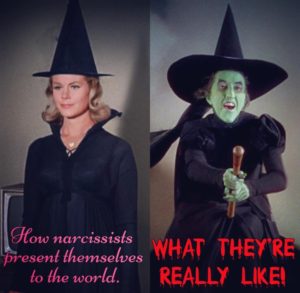
Split image showing a smiling “good witch” labeled as how narcissistic personalities present publicly, contrasted with an angry “wicked witch” labeled as how they behave privately in close relationships.

The Binary: Invisible or a Spectacle

Post-therapy processing. I keep noticing a painful pattern. When I speak directly—calmly, clearly, logically—it’s often received as aggression. Meanwhile, dishonesty softened with politeness, or harm delivered with a smile, is protected, even rewarded. In the past, I would escalate or collapse, distracting from the issue with my reaction. I don’t do that anymore, but the outcome is no better. My existence itself starts to feel like the problem. I’ve been labeled “demanding” or “confrontational” simply for asking direct questions or naming inconsistencies. Clarity seems threatening to those who rely on ambiguity. Without wiggle room, there’s no easy exit, so instead of engaging with the issue, the focus shifts to me for raising it. Clarity isn’t manipulation—it’s an attempt to understand what’s real. Passive aggression works differently. It dismisses boundaries, contradicts itself, or withdraws without owning the impact. If I react, my reaction becomes the headline. The harm vanishes, replaced by concern about my tone, my intensity, my feelings. That’s where the punishable feeling comes from—not because I’m wrong, but because I’m visible. This is especially common for people like me: highly sensitive, neurodivergent, earnest. In systems that prize politeness over honesty, directness breaks the spell. Accountability is reframed as hostility. Repair is avoided. The story becomes that the person naming the problem is the problem. My choices narrow: stay invisible, or be made into a spectacle. Neither feels safe or healthy. I’m not interested in winning arguments or proving anyone wrong. I want movement, repair, the question: what can we do to make this better? Yet again and again, I meet people who want only rightness—debates about tone, form, correctness—because once rightness is established, nothing more is required. I’m still healing from how often my nervous system has been punished for my inability to play along. I’m learning not to disappear or become a spectacle. I keep seeking a third way. I want to believe that in healthy systems, directness doesn’t equal war, disrespect, or danger. That standing without shame or silence isn’t audacious—or punishable.

Read More
Illustration of Gottman’s Four Horsemen representing criticism, contempt, defensiveness, and stonewalling in relationships

When Rightness Trumps Repair: Patterns in Diifficult Relationships

I’m getting closer to being able to name and understand this pattern after friction or  rupture in relationships with people heavily invested in their rightness and entitlement, and equally invested in my wrongness and unworthiness. When the conversation—tilts into litigation mode, they get to focus on proving the impeccability of their form while pointing to my “sensitivity” and inability to percieve correctly as THE problem. Historically I offered up the gift of distraction – with high reactivity- my increasing escalation or full on collapse. Having withdraawn these unfortunate ways of feeding the binary dynamic, has not been well-recieved, which at first made no sense, to me. I was like “let’s celebrate”- Now we can really focus on repair—right? Wrong. When I limit my communication to the question of “what we can each do to make this better for us”, it has been treated as an act of hostility or insolence – their focus and commitment are to their authority, rightness, and excellence of form. Because if they are right and in perfect form, then the only problem is the person who notices the problem or reacts imperfectly to it. When I fail to degrade myself in escalation or collapse, I am consistently met with stone cold silence. There is a specific exhaustion in holding the map while being told the map is the problem:

Read More
James Baldwin quote about facing truth overlaid on a minimalist image symbolizing emotional clarity, reflection, and the cost of acknowledgment.

How to Alienate Others and Die Alone

How to Alienate Others and Die Completely Alone A Working Draft Introduction I used to believe relationships failed because of misunderstanding. This is my attempt to document how I learned they fail faster when you insist on a shared understanding. Proven Alienation Accellerants Step One: Take Everything Seriously Assume words mean things. Assume patterns matter. Assume what hurts once will hurt again. Respond with directness. Step Two: Ask for Clarification When something feels off, say so. When it still feels off, say it again — more carefully this time. Use sentences like: This will make people tired. Step Three: Confuse Discomfort With Harm Fail to understand that making someone uncomfortable is more problematic than being hurt. Persist in believing that pain should be addressed instead of silenced. Notice when people withdraw. Misinterpret that as something to explore rather than a warning. Step Four: Believe Repair Is a Thing Assume relationships bend instead of snap. Assume naming a rupture invites care instead of retaliation. Wait for accountability that is never coming. Decline reconcilliartion without repair. Reject coercion disguised as “confusion” or “concern” This is where momentum builds. Step Five: Keep Showing Up as Yourself Do not read the room fast enough. Do not learn when to soften, shrink, or disappear. Continue speaking in full sentences when fragments would suffice. Remain available, clear, and boundaried. Remain earnest. People will begin to agree you are the problem. Step Six: Get Labelled as “A Lot” Be described, vaguely, as: Note that no one can point to a specific event. Accept that your personality is now the evidence. Step Seven: Try Harder Explain yourself better. Use fewer words. Then more precise ones. Then fewer again. Apologize for the impact. Then for the tone. Then for existing in a way that requires conversation. Watch nothing improve. Step Eight: Be Surprised by the Outcome Be shocked when: Marvel briefly that love was conditional on compliance. Conclusion If you want to alienate others efficiently, believe that relationships are places where things can be directly addressed. If you want to ensure solitude, refuse to learn how to erase any trace of your unique experience and existence. I find myself at an impasse with my historical relationships. All taking the same shape—the kind I was conditioned, programmed, and groomed to choose and accept.

Read More
Text message-style graphic showing an abuse disclosure met with demands for extensive evidence, while the denial "I didn't do it" is immediately met with "WE beleive YOU"

The Emotional Person Is Always the Problem

I am a survivor studying the wreckage, noticing a pattern.When a person is being harmed, a mountain of tidy evidence is demanded—transcripts, videotapes, witnesses, perfectly composed testimony—and even then, it is rarely sufficient. Meanwhile, the person with the well-fitting mask and an image to manage says, “I didn’t do it. The emotional person is clearly troubled.”And the world responds, “Okay. We believe you.” In a system where sucking it up and smiling is the only rewarded behavior, a reasonable question emerges:Who is more likely to be misrepresenting the truth? The person shackled by the humiliation of bleeding out—a position that offers no social gain and constant judgment?Or the person who has everything to lose if the mask slips? I am not proud of the desperation in my archives.But I am not ashamed of being destabilized by a system designed not to protect me. One which says- you can destabilize a person (cue: coercive control) and then point to their destabilization as THE issue. No. Just no.

Read More