Rightness Over Goodness
The tribal tension in our country right now is a perfect parallel to the dynamic of my family of origin—overflowing with remarkable efforts toward rightness and victory rather than goodness and kindness.
By rightness, I mean triumph and domination, as if winning is evidence of truth and goodness.
In my own recovery, guided by a daily commitment to spiritual striving, I seek only to practice living and acting with a glad and pure heart. I can be fairly good at that while also refusing to deny the angry part of my heart that wants to punish, shame, and expose the non-goodness I believe has been forced upon my sons.
I own that anger and contempt. I hold myself spiritually accountable—not only for factual accuracy, but for continually examining my motives toward myself, my children, and others.
This blog is not an attempt to assert my goodness in contrast to someone else’s badness. It is a chronicle of my journey toward living a more wholesome life—not more wholesome than them, but more wholesome than what I have experienced, witnessed, and done in the past.
I am a work in progress.
Kindness Is Not Selective
I stay close only to those who, through action, model and teach loving-kindness—not to be confused with favoritism or flattery.
Kindness is not selective.
Kindness simply is.
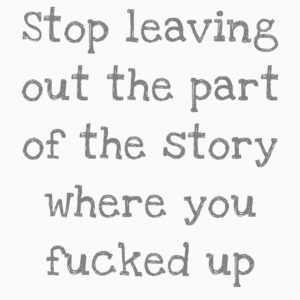
Anything less… refer to the meme.
It is never too late to amend.
What I Want My Sons to Learn
With two young sons to shape and guide, I feel continually assaulted by the models of love and goodness coming from the other side.
Goodness is rooted in humility.
What I observe and resent is arrogance and betrayal dressed up in parties, smiles, well-set tables, awkward flattery, favoritism, inappropriate hugs, and denial—behaving as though this is what family and love look like.
Family does not equal love.
Kindness does.
By my definition, love and family are honest. They own the harm they do, have hard conversations, and share the work of healing and mending.
My boys gathered with my ex and his girlfriend around a table with my sister and mother—people who have fouled me with lies, insults, and hardships they righteously impose while acting as though all is well. Requiring children to dissociate from their mother and themselves is wrong and harmful.
Mentally, emotionally, and spiritually, they are harming children.
My ex loves this arrangement because he feels chosen, special, and preferred. Flattery and favoritism are the main currency. As though, after everything he brought down on our little family, my family’s embrace of him somehow proves my badness.
Their collective sickness is unbearable to me.
My wise friend Anna says, “Why do you care if they spend time together? It makes perfect sense. Yay. The assholes chose each other. Of course they did.”
She is right.
But it is at my children’s expense.
The disregard for them is beyond reproach.
Their performance of family—the appearance, the gathering, the numbers—is, to them, proof of rightness and victory. It may confuse small children.
I will object for all my days.
Hopefully with less laser-focused dedication someday.
Fake Humility
What this meme reminds me of is the fake humility that, for so long, I could not articulate.
In my family and in my marriage, they would go over the top apologizing for traffic, burnt meat, forgetting to shut the door, or running out of wine.
But never acknowledging an error in judgment.
Never apologizing for words spoken or actions taken in haste or anger.
Never.
In my experience, they have never acknowledged their contribution to tension or havoc resulting from their choices.
Either justified.
Or oblivious.
#wtf
The Wrong Things We Apologize For
I have always been the apologizer.
The sorry one.
In both my family and my marriage, I was sorry that I experienced bad feelings or behavior, and sorry for causing bad feelings or behavior in others.
What bullshit.
I participated in the sickness.
I am sorry for other people’s harsh feelings and behaviors—not because I am responsible for them, but because they are unfortunate. If you have a conscience or a soul, you cannot help but feel sorrow for suffering.
If we learn and grow primarily through mistakes, what does that mean for people who do not recognize themselves as people who make mistakes?
Traffic.
Burnt meat.
The toothpaste lid.
The toilet seat.
Those are not moral failures.
No apology is necessary.
How about:
“I am sorry I said that.”
“I am sorry I did that.”
A Final Thought
Ranting time of month.
Sorrrrrrrrrry.
But I simply cannot say—or hear—this enough:
Kindness is not conditional.
It is not preferential.
It is not exclusive.
Masking unkindness with gatherings, gifts, or compliments intended to elevate one person while diminishing another is both sick and sickening.