
In a system where acknowledging injury threatens the archetypal version of reality everyone is supposed to be organized around:
The governing mythology seems to be that strong, healthy, rational people are unaffected. They do not feel disturbed, injured, angry, or overwhelmed. Those experiences belong exclusively to the other category of person—the difficult, unstable, dramatic, overly sensitive conflict-maker.
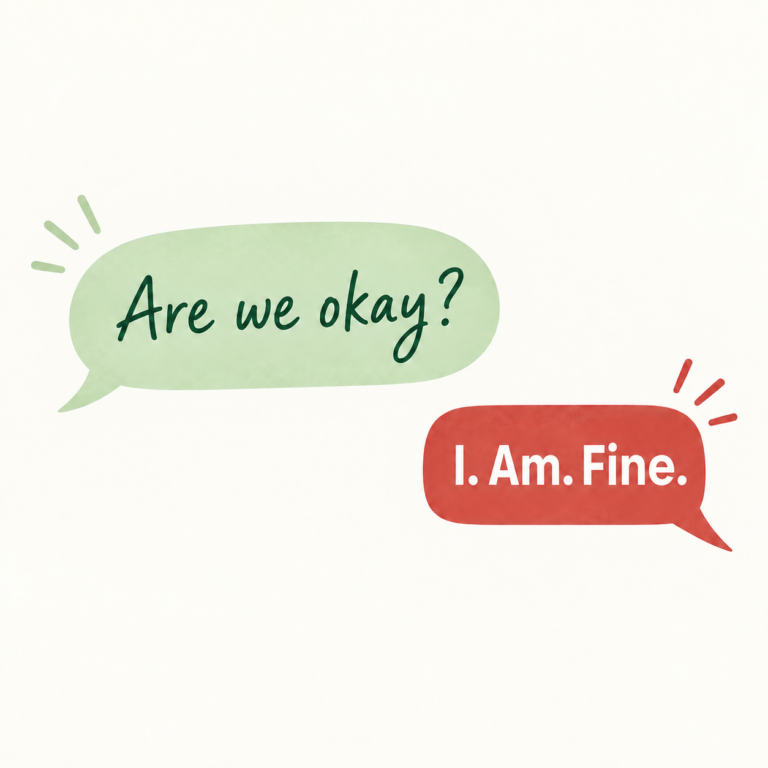
So when I ask, “Are we okay?” or notice tension and inquire about it, my question can carry two almost outrageous assertions:
You appear emotionally affected.
And:
I believe I might matter enough to have affected you.
The response cannot be, “Yeah, that bothered me.” It is some version of:
Nothing is wrong. I am fine.
(door-slamming energy)
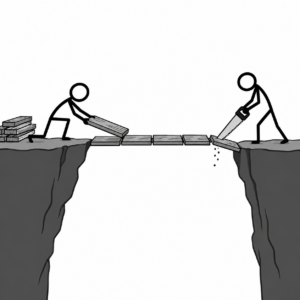
The attempt at repair is treated as intrusion, neediness, conflict creation, or self-importance. The only issue is ME, my core-wrongness.
There was another scenario in which the inquiry was weaponized.
My sister could do something upsetting, mock or gossip about me, then circle back shortly after in what appeared to be a tender way and ask if something was wrong.
I understood that as an invitation to connect.
Looking back, it may have been closer to:
Are you aware of what I have done?
If I said, Yeah, X bothered me, that was the on-ramp to a debate over the wrongness of my perception, character, and personality.
If emotional negative impact itself is associated with weakness, repair is unnecessary by definition.
There shall be no repair for a thing the other person insists never happened. No amends for an injury dismissed as the injured person’s sensitivity. No space for either giving a meaningful apology or receiving one.
I’m sorry I hurt you will not be said or well received.
I find this as stunning as it is common.
I have realized in this season of life that it is not safe for me to engage in non-optional relationships with people who cannot, in good faith, enter into challenging conversations aimed at resolution and repair.
This is the dynamic and personality type I have spent much of my life trying to navigate.
Whatever else may be true, this has been my experience, and it is a pattern I am intent on breaking.