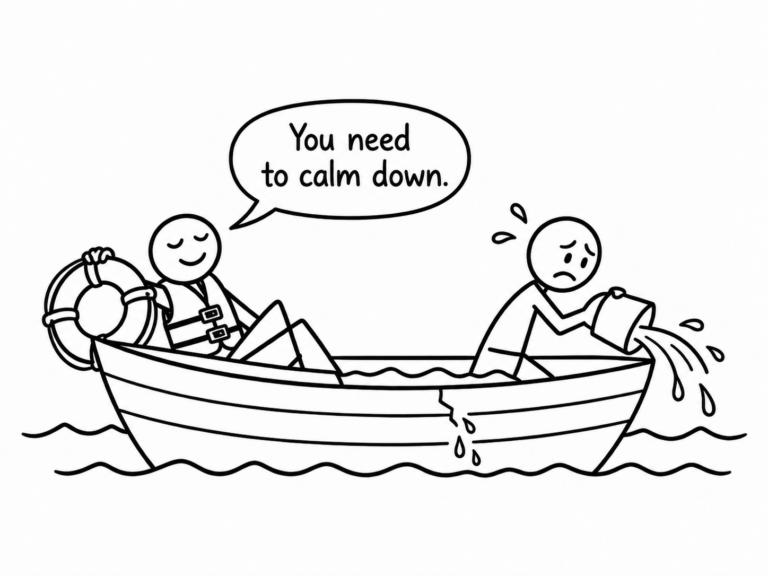
I am beginning to recognize and more effectively name and navigate familiar systems, patterns, and personalities.
In power imbalances, the person with more status or authority can seem even more credible when appearing almost completely unaffected — mildly inconvenienced at most.
Beneath a curated exterior — detached, unreadable, even smiling or measured — strategically executed impunity may pass for sovereignty, shielded from challenge by status/rank itself.
By contrast, an emotional response to threat or injury can be marked as excessive: evidence of defect, weakness, and wrongness, rendering the account of what happened inadmissible.
Once that logic is established, power-over can pass as reasonable and justified.
This is where emotional violence can comfortably hide: in the latitude granted by role, status, or perceived legitimacy to diminish, exclude, intimidate, or overpower another person while the resulting distress is treated as further proof that the response was warranted.
