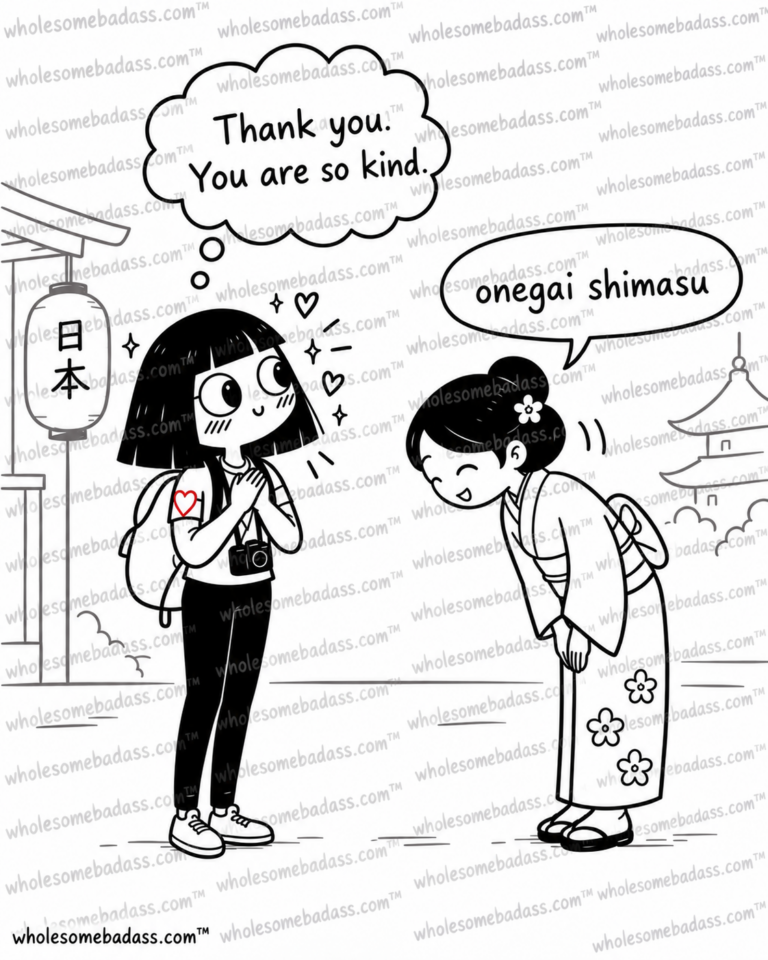
I can’t help but laugh in disbelief as I recall my initial encounter of Japan. I seriously took the bowing personally. Not joking. I was 22, and not an all an adult. My understanding of respect, deference, and what people were entitled to take from one another was impossibly distorted.
What I experienced as exceptional “kindness” was, in many ways, ordinary cultural respect. How could I have known? I do not recall behavioral models for respect and kindness. I was witness to only varied posturing, which was baffling and not at all intuitive for me. And no system with which to engage and demonstrate high regard for others. Just like weird reverence and what I would now call coercive abuse.
A New Way to Relate
For much of my life, the only familiar relational dynamic was binary: power over or be powered over. I saw rare others (like unicorns) living with more ease, mutuality, and peace, but that seemed remote. I knew only the system I had been brought up with.
And if I had to choose from the menu of options I understood, I definitely believed it preferable to be on the giving end of the abuse because I equated that with authority and rightness.
I had internalized the belief that how others treated me was information about who I was and what I deserved, and so learned to try and excuse my own harmful behavior by charging it to someone else…like my reaction to them was reflective of ONLY them.
I could make no sense of why relationships hurt so much and why connection seemed synonymous with struggle. Looking back, of course it was miserable. If the only options were intimidation or submission, there was no room for flow, cohesion, or safety.
And I am actually an avid fan of submission and surrender, but only with those who can be trusted on the other side of that dynamic—more harmony and collaboration than coercion.
I have been utterly shocked to learn that some things can be familiar, common, and still symptomatic of unwellness. What feels pivotal is seeing both directions clearly: the harm done to me, and the harm I learned to repeat and then to end.
I am deeply pained and regret the harm I learned to absorb, carry, and then offload onto other people. I understand more now, and I live differently, but understanding does not undo impact. Still—so much fkn unlearning. Reparenting yourself at 60 is a lot.
What did you once think was normal and acceptable that you now view differently?