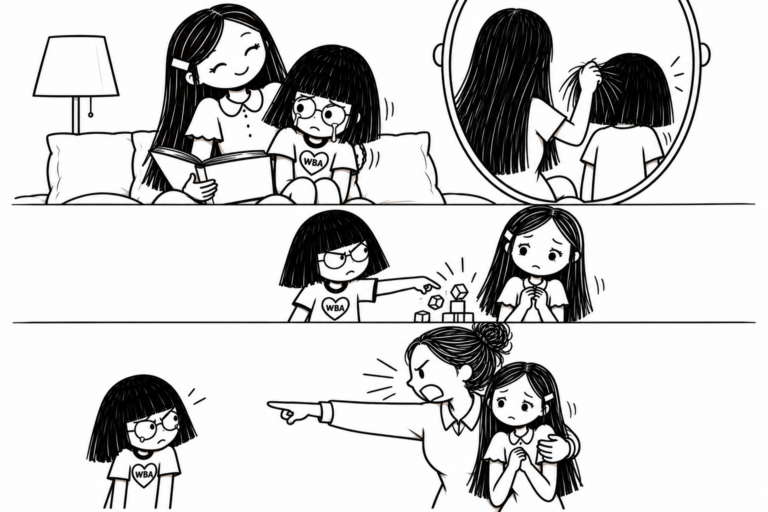
The ability to engineer someone else’s downfall while appearing to have had nothing to do with it.
I’m intimately familiar with calculated hostility. What I still cannot fathom is the level of executive function required to provoke someone, anticipate their reaction, and use it against them while presenting as entirely uninvolved.
For someone as highly sensitive and reactive as I am, with my nervous system pretty much on the outside of my body, that kind of calculation is incomprehensible. My long game and executive function were scorched by ongoing unresolved trauma. As a child, I was frequently crying, throwing up, having meltdowns, and reacting intensely to things that seemed not to even register for others.
In my family, my reactivity was met only with shame and punishment. I was judged ungrateful, negative, too sensitive, thin-skinned. I suppose the hope was that enough callousness might eventually toughen me.
My skin never thickened, but I learned to be mean. Vicious even. Sometimes it offered a momentary release. The relief was fleeting. The guilt and shame were not.
Contempt was standard fare, but some people (audibly clearing my throat) seemed instinctively savvy about rules and skills that eluded me. They could deliver a devastating strike with complete self-possession and have it pass for teasing, a misunderstanding, or a reasonable response to someone who had displeased them.
My reactions were unmasked, unbridled. Obvious, undeniable, and punishable.
And I was bewildered. Wasn’t I doing as my family does?
My sister, seven years older, seemed to have mastered the poise I lacked. Provoking and baiting could pass as harmless while leaving me visibly distraught.
Whatever provoked my distress— became secondary to my reaction.
My emotional reaction could be counted on to steal the show and seal the case.
Poise posed as evidence of good character; my reactivity, evidence of bad.
I was innocent only of understanding the rules.
Now, nearly 60, with language and recovery, I think the unspoken rule I couldn’t metabolize wasn’t that ridicule and belittling were wrong.
Apparently, they were perfectly acceptable, even applauded, when directed at someone considered deserving, provided they were delivered with composure.
Only recently have I begun to identify concealed hostility. Diminishing remarks disguised as observations. “Brutal honesty” that is more brutal than honest. Provocations. The ability to degrade or discredit someone while appearing calm, unaffected, reasonable.
Have you ever been provoked into a reaction that was then used as evidence against you?
