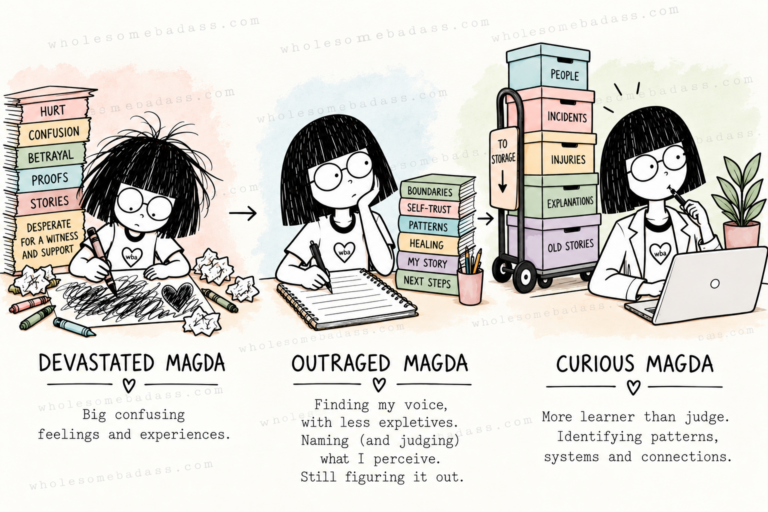
For most of my life, I didn’t even recognize healthy and unhealthy connection as distinct possibilities. Like a fish unaware of the water it’s swimming in, I understood relationships through the only environment I’d ever known. I had learned distorted definitions of love, safety, trust, and connection.
What if the most important measure of love isn’t how much someone loves a person, but what happens in the experience of being loved by them?
Family ties, intensity, chemistry, and intermittently good experiences aren’t evidence of a healthy relationship. I’m recognizing how toxicity can exist in the way a relationship functions—the architecture of the bond—not simply in either person.
Someone may have an entirely different experience with a person than I did, particularly when admiration, usefulness, or reliance shapes how that person relates to them. When someone says, “I’ve never experienced them that way,” I recognize that may be true. What’s hurtful and inappropriate, is when their experience is intended to invalidate mine.
Their experience doesn’t disprove mine, any more than mine disproves theirs. I’m describing the relationship I experienced, not issuing a verdict on every relationship that person has.
| ♡ Feelings I Associate with Nourishing Love ♡ | ☠ Feelings I Associate with Harmful Relationship Dynamics ☠ |
|---|---|
| Healing ♡ | Alienation-Division |
| Soothing ♡ | Diminished-Disregarded |
| Safety ♡ | Confused |
| Growth ♡ | Silenced |
| Exploration ♡ | Frightened |
| Self-expression ♡ | Power-imbalance |
| Expansion ♡ | Contracted |
Yes, I am the common denominator in all my relationships—as are we all. So is the relational template I carried into them. It influenced not only the relationships I entered, but what I helped create and sustain within them.
That template shaped:
- Who I chose: People whose ways of relating fit what I’d learned.
- What I tolerated: Conditions I hadn’t recognized as harmful or unacceptable.
- How I participated: The unfortunate ways I had learned to preserve connection.
I recognize my contribution to my relational patterns without taking ANY esponsibility for another person’s behavior.