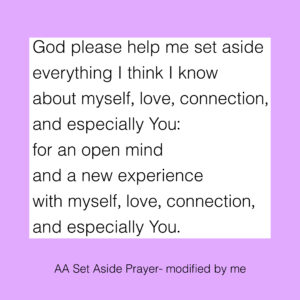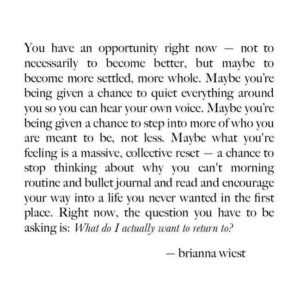
I’ve resumed journaling — rigorously, of course, because I tend to do things either with full intensity or not at all. With this man, a widower who lost the love of his life, I’m able to behave a little differently than I would with someone whose story I think I understand. I can’t make the usual assumptions about his motives or reactions. Honestly, I shouldn’t make assumptions with anyone, but I often do. With him, I pause.
I go straight to my journal and write down what he did or didn’t say, how it affected me, and the story I’m telling myself about it. Then I write what I would say to him if that story were true. Naming the reaction helps me see what I need, what I fear, and whether I’m responding to the present moment or to old trauma. PTSD can pose as intuition, and intuition can pose as PTSD. I’m learning to tell the difference.
I’ll call him Stu. He differs in ways that keep me from defaulting to old assumptions, and his responses when he feels challenged or confused are genuinely surprising — in the best way.
I’ve known very few people who are both humble and courageous enough to be self‑reflective. Things no one in my family or past relationships ever admitted, he says easily: “I don’t know what I’m doing. I can be a difficult and confusing person.” He says it with a kind of unintentional clarity that feels rare. I’m hopeful that, however long our paths cross, we’ll contribute to each other’s healing.
New relationships always reveal old wounds and the work still ahead. Stu is a steady journeyman — not afraid, not too proud, and willing. We agree to take things one day at a time.
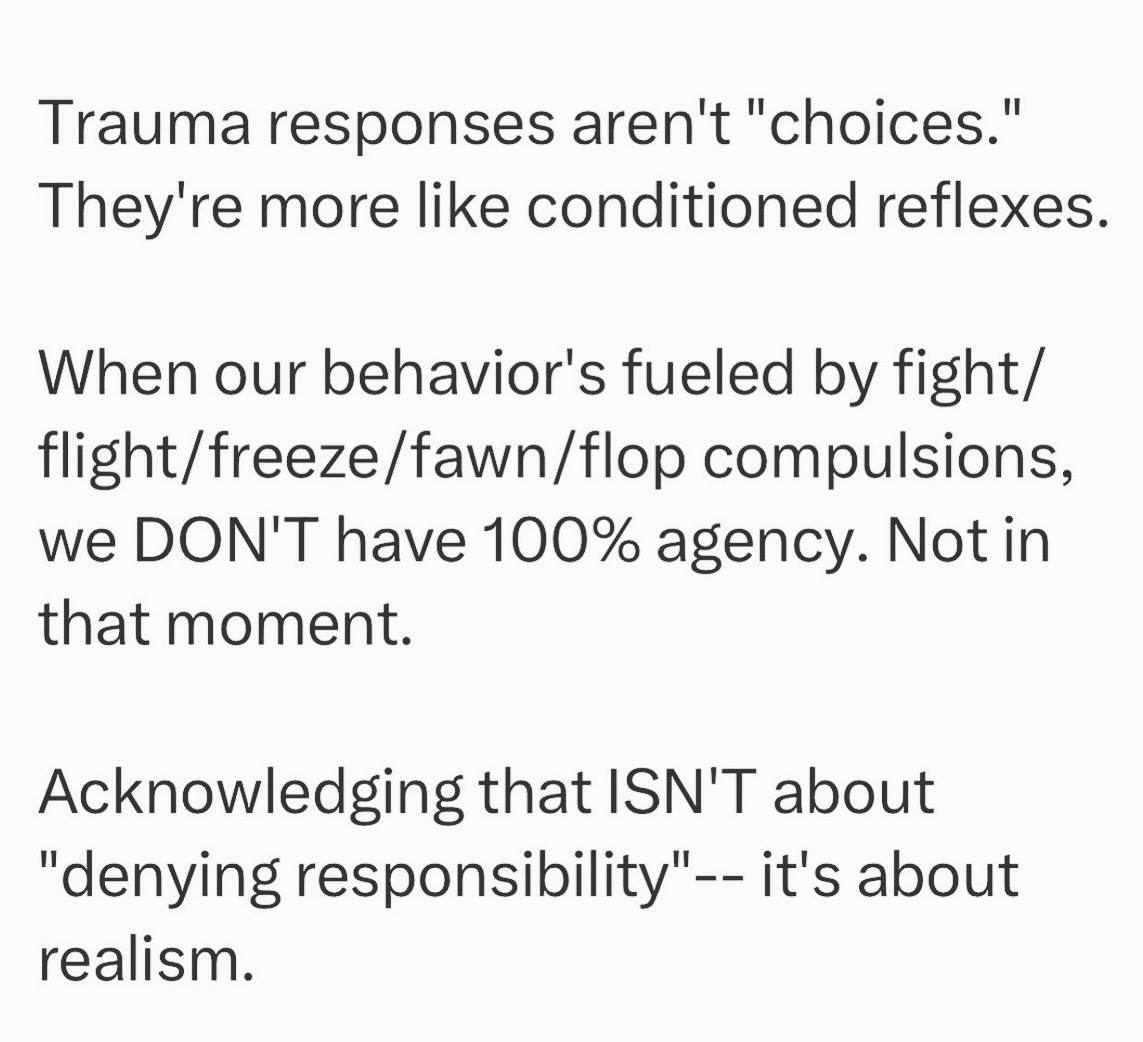
We both show up honest, open, and willing. I cry often — not unusual for me. My feelings get big, and tears are how they move through. I’m easily overwhelmed by emotion and sensation, partly because of my wiring and partly because of trauma. My nervous system is porous; everything gets in. And in my past, overwhelm was treated like a problem to be mocked, shamed, or dismissed — dramatic, thin‑skinned, crazy.
In my family of origin, insensitivity was treated as strength, and sensitivity as weakness or selfishness. It was managed with alienation, mockery, and smearing. I’m grateful to be growing a healthier understanding of sensitivity, courage, compassion, and self‑care — and a clearer awareness of what it means to be around people who judge or mask sensitivity and treat that as superiority. The ranking system in my family is obvious: the less sensitive you appear, the higher your value.