
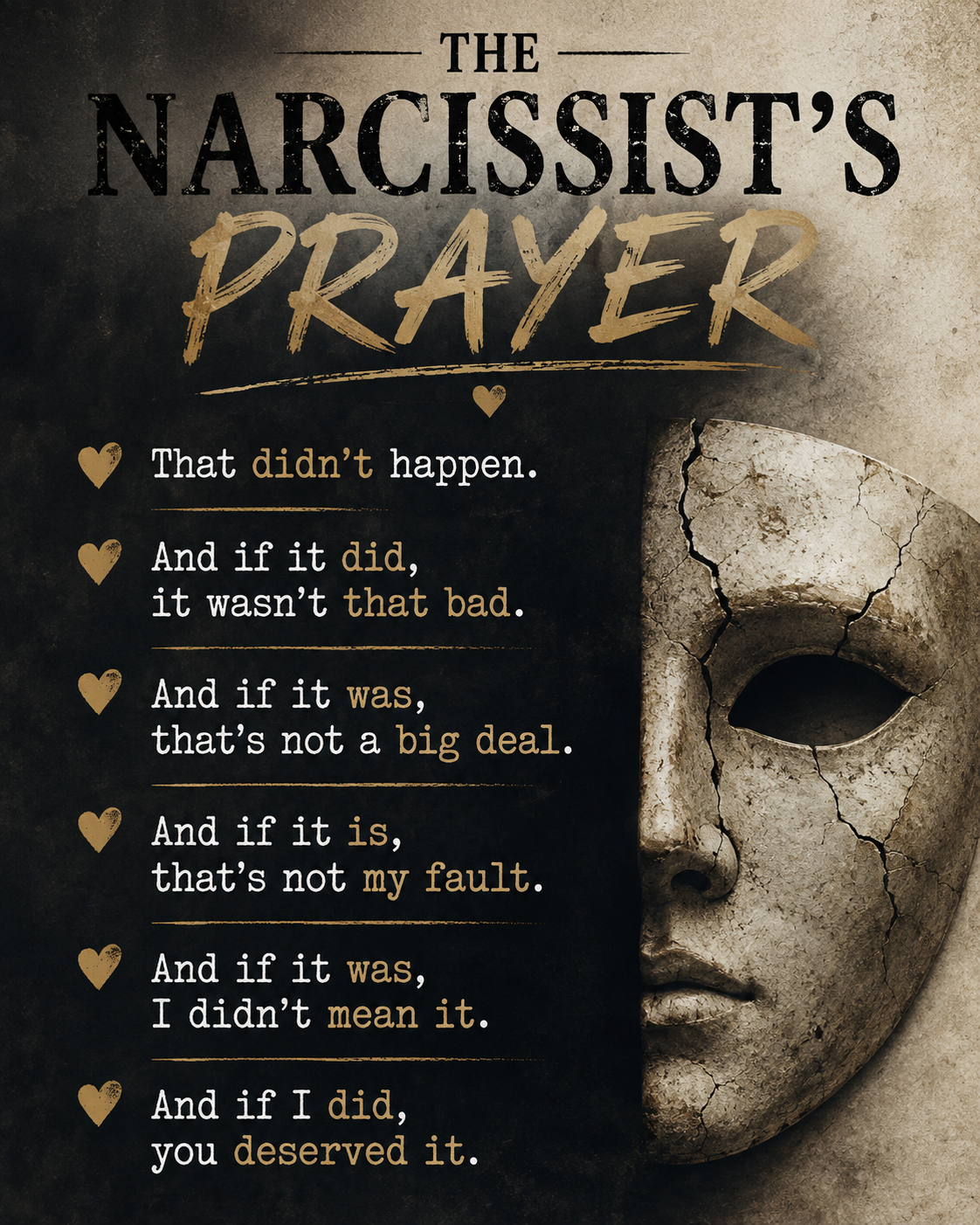
A person can know something experientially long before they can articulate it.
They might know, for example, “After X is upset with me, I end up confused. I initiate communication thinking I had a legitimate concern, and somehow I leave apologizing and wondering whether I caused everything.”
They don’t necessarily have words or concepts to process what happened.
Once someone learns concepts like blame-shifting, triangulation, invalidation, double standards, DARVO, conditional approval, or refusal of repair, those concepts can provide handles for examining an interaction:
Wait—was I actually heard? Did we each consider or examine our contributions? Was disagreement permitted? Did responsibility somehow become entirely mine?
And importantly, language doesn’t have to supply the verdict. It can supply questions.
That may be especially valuable for someone who’s been raised inside a particular relational system, because whatever happened repeatedly can simply register as this is how relationships work.
Conflict is information, not a trial where somebody has to be found guilty.
You can finish a disagreement still thinking, I was right about the original issue, and nevertheless learn: I interrupted you. I got defensive. I misunderstood what you meant. I didn’t realize that mattered so much to you.
Or: I still disagree, but now I understand your reasoning.
And the other person can do the same.
Someone can be displeased with you without their displeasure becoming evidence that you’re bad. They can misunderstand you without their interpretation replacing your knowledge of yourself. And you can discover something uncomfortable about your own behavior without having to collapse into therefore I am the problem.
In a healthy rupture, both people have something to metabolize. Not necessarily equal blame—sometimes one person really did behave badly—but both people still have an encounter to process.
What happened? What did I do? What did you experience? What did I misunderstand? What does this change between us? What is needed for repair?
In the archetypal dynamic, one person effectively exempts themselves from that process. Their internal work stops at: I was right to do or say X because of what you did.
Everything downstream gets assigned to the other person.
But the person on the receiving end doesn’t get to bypass metabolizing the rupture. They can end up metabolizing too much.
They process the original conflict, the accusation, the other person’s certainty, the withdrawal, their own behavior, their memory, their motives, what they could have done differently, whether they’re actually the problem—and they do it without the other person’s participation.
Then contact resumes without repair.
All of that processing has nowhere relational to land. It can instead become adaptation: anxiety, self-doubt, vigilance, accommodation, rehearsing, overexplaining, trying harder, monitoring tone, becoming increasingly careful.
The rupture isn’t unprocessed. The processing is asymmetrical.
One person preserves their existing understanding of themselves.
The other person is left reorganizing themselves around the unresolved rupture.
Repair brings the information back into the relationship, where both people can examine it instead of one person having to carry and interpret the whole thing alone.
One person is trying to understand what happened. The archetype is operating from the position that nothing happened that requires understanding.
One person is asking, What happened between us? How did we get here? What needs to be repaired?
And the answer—explicitly or through behavior—is essentially: There is nothing between us to repair. The problem is that you’re confused, anxious, sensitive, difficult, or unable to let things go.
So the effect of the interaction gets reassigned as a characteristic of the recipient.
The anxiety created by unresolved rupture becomes evidence that you’re “anxious.”
The confusion created by contradictory interactions becomes evidence that you’re “confused.”
Your attempts to get resolution become evidence that you “can’t let things go.”
Your attempts to clarify what happened become evidence that you’re “overthinking.”
The interaction disappears from the explanation.
Then when ordinary contact resumes without acknowledgment, one person can experience that as moving on, while the other person is still carrying an unresolved event that supposedly never happened.
There can be no repair when only one person is able to acknowledge that there was a rupture.
You can say, “Something you did didn’t land well with me,” and get: Nothing happened. You’re misinterpreting me. You’re too sensitive.
Or you can notice distance and say, “Something seems different between us. Did something happen?” and get: Nothing’s different. You’re imagining things. Why do you always do this?
If you name an impact, you’re creating a problem.
If you notice an impact, you’re creating a problem.
If you ask about a rupture, you’re creating a problem.
If you remain unsettled because there was no repair, that becomes the problem.
The recipient isn’t just processing a conflict alone. They’re being asked to process a conflict whose existence has been denied.
There isn’t even an agreed-upon event to work with.
Something happened between us. I can observe the change. I’m experiencing the consequences. But I’m being told there is nothing here to discuss.
Which may be why “nothing happened” is so consequential.
It doesn’t merely refuse repair.
It removes the shared reality from which repair would have been possible.
Nothing happened. Nothing’s wrong. There is nothing to discuss.
But then there’s silence. Distance. Withdrawal. Maybe coldness.
You’re left alone with whatever the fuck just happened.
That’s the contradiction.
You’re experiencing the consequences of a rupture while being denied the existence of the rupture itself.
Whatever else may be true, this is a defining structure within the archetypal dynamic.